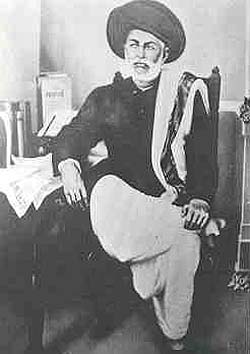
Start where the old code does: the Shudra and the untouchable were barred from learning. Bühler’s public-domain Manu forbids teaching sacred law to a Shudra (4.80–81) and defines him as “one birth only,” outside the twice-born who alone may study (10.4). So the plain question — who first opened a classroom to the people the śāstra shut out? — has an untidy, honest answer.
The colonial hinge: the Charter Act of 1813
For decades the East India Company kept missionaries out, fearing they would unsettle its trade. That changed with the Charter Act of 1813: a “pious clause,” pressed by William Wilberforce and the Clapham Sect, finally admitted Christian missionaries to India — and the same Act made the first state commitment to education, earmarking “not less than one lakh of rupees” a year.
[Documented] Missions had in fact begun even earlier where they could — a school in Madras in 1805, one at Visakhapatnam in 1806 — and after 1813 they expanded fast. By 1901, mission institutions in the Madras Presidency numbered 3,778, a large share of all schooling in the province, reaching lower-caste children and girls whom the old order had excluded by design.
Macaulay’s ceiling
Do not romanticise the colonial side, though. Macaulay’s 1835 Minute — quoted verbatim elsewhere on this site — set the ceiling deliberately: a thin class “Indian in blood and colour, but English in taste,” not mass literacy. The state’s own scheme was an elite one. “The British educated India” is a myth; the more accurate sentence is that missions and Indian reformers opened schooling to the excluded, against both śāstric prohibition and a colonial state that wanted only a translating elite. [Documented]
The backlash — from the national movement
Here is the part that complicates every side. Opening the classroom to women and the low-born drew fierce opposition — and not only from priests, but from within the nationalist mainstream.
[Documented] Bal Gangadhar Tilak, through his paper Kesari, opposed the Age of Consent Act (1891) — which raised the age of consent for girls — as illegitimate colonial interference in Hindu custom, and he attacked reformers who leaned on missionary or colonial support. Among his targets was Pandita Ramabai, a Sanskrit scholar who had converted to Christianity in 1883 and founded the Sharada Sadan to educate women, especially widows.
Be fair about the argument: Tilak’s stated principle — that reform should come from within Indian society, not be imposed by the coloniser — is not a stupid one, and this site does not caricature it. But the effect of that principle, in 1891, was to oppose raising the age at which a girl could be married, and to discredit a woman who was educating women. Principle and consequence have to be weighed together.
The two codes on the classroom
The contest resolves, as always, into the two codes. The old one forbade the Shudra to study and a woman to be independent. The new one makes the opposite an enforceable right: Article 15(4) allows special provision for backward classes in education, Article 45 / 21A make schooling a duty and then a fundamental right, and Article 46 directs the State to promote the education of the weaker sections. What missions, Phule, Ramabai and later Ambedkar fought for against śāstra and empire alike, the Constitution simply guarantees: the classroom is not reserved by birth.